The new standards of sustainable tourism in Paris: towards a more local, responsible and profitable urban hospitality model
A new way to experience, invest in and enhance Parisian hospitality.
Reading Time: 6 Minutes
In Brief
In This Article
In Paris, sustainable tourism is no longer just a communication argument: it is becoming a new performance standard for hotel industry players. Between travelers’ expectations, environmental pressure, local integration, and asset value enhancement, investors must rethink the way value is created in urban hospitality.
Through its local and experiential approach, Moon Hospitality contributes to this shift by developing living places that are connected to their neighbourhoods.
1. Sustainable tourism in Paris: a new way to read the city
The French capital is encouraging a more balanced and local approach to urban travel
Paris is entering a new phase in its tourism development. Following major international events and the legacy of the Olympic and Paralympic Games, the capital is seeking to better distribute visitor flows, showcase its neighbourhoods, and encourage more responsible, inclusive, and local practices. The City of Paris notably promotes “Paris autrement” — a different way to experience Paris — with the ambition to decentralise tourist flows, highlight neighbourhood identities, and strengthen the destination’s accessibility.
In this context, sustainable tourism in Paris is no longer limited to soft mobility or reducing the carbon footprint. It also concerns the way hotels integrate into their immediate environment: local suppliers, neighbourhood experiences, energy efficiency, connections with residents, and contribution to the local economy.
For investors, this shift creates a new value framework. A high-performing hotel is no longer simply a well-located asset: it is a place capable of meeting travellers’ expectations while aligning with a sustainable urban strategy.
Key Trend to Watch :
the rise of eco-responsible accommodation;
the promotion of neighbourhoods beyond traditional tourist routes;
the sustainable transformation of existing establishments.
Want to know the latest trends, our upcoming projects, or private events?
2. Local anchoring as a new driver of desirability and hotel performance
Hotels strengthen their appeal.
Sustainable tourism in Paris is increasingly based on a logic of local anchoring. Travellers are no longer simply looking for a comfortable room: they want to understand a neighbourhood, discover authentic addresses, encounter local expertise, and enjoy a more personal experience.
This is precisely where urban hospitality can stand out. A hotel that is well integrated into its neighbourhood becomes a gateway to the city, as well as a local player capable of generating flows beyond accommodation: dining, events, coworking, retail, artisan partnerships, and local experiences.
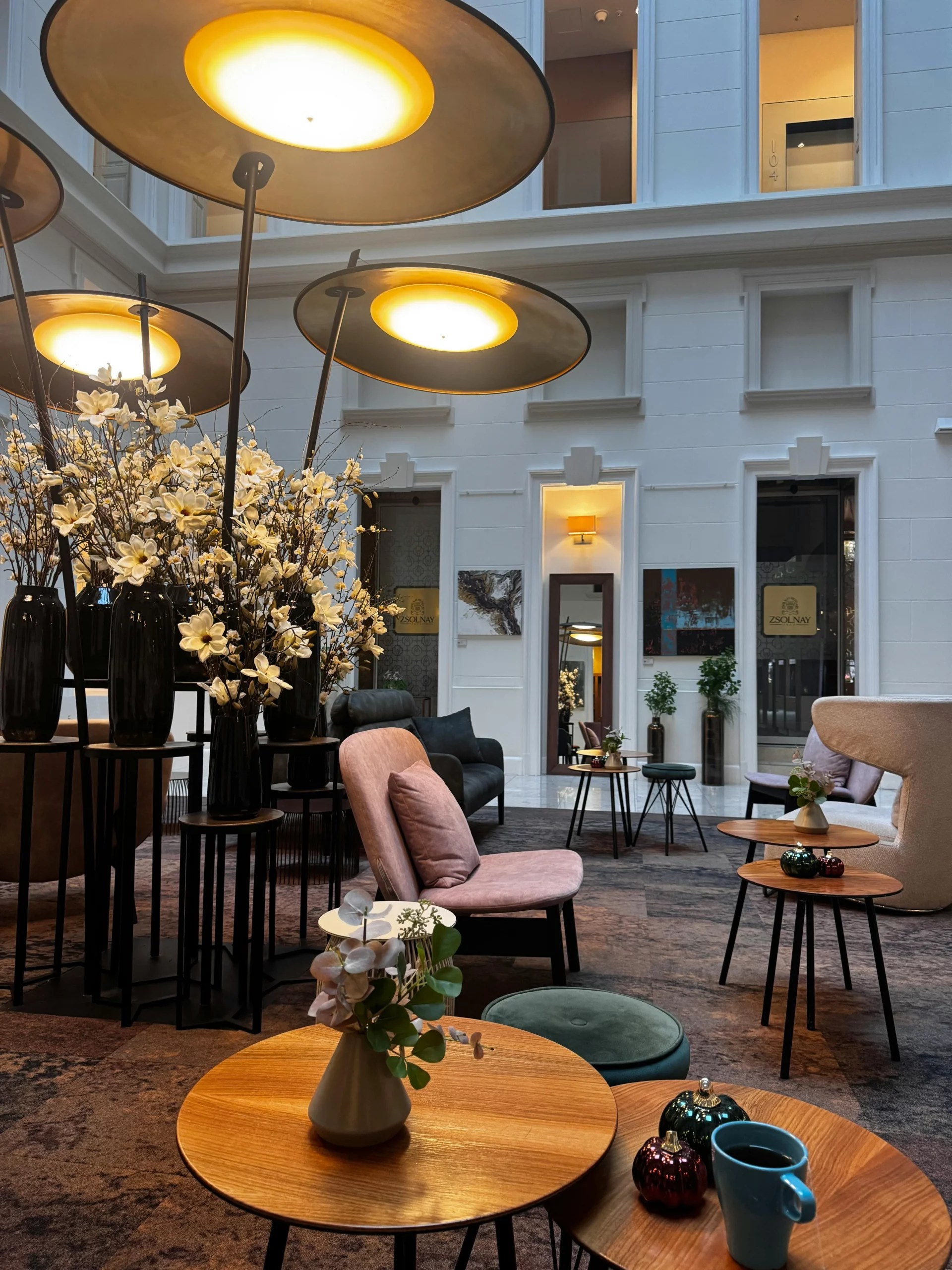
At Moon Hospitality, this vision translates into places designed as open, warm, and hybrid neighbourhood homes. Maison Mère, in the 9th arrondissement, illustrates this approach through hospitality connected to its surroundings: restaurant, bar, events, local collaborations, and a personalised guest experience. Joli Môme, in Les Batignolles, continues this logic with a 3-star boutique hotel built around a convivial, accessible neighbourhood spirit.
Moon Hospitality’s Analysis
a sustainable hotel is also a hotel that is better integrated into its local market;
the guest experience begins before the room, through the connection with the neighbourhood;
local anchoring strengthens brand image, guest loyalty, and operating value.
This dynamic aligns with Parisian initiatives around slow tourism, particularly along the Seine, with the aim of offering more environmentally respectful experiences that are better distributed across the capital.
3. A strategic opportunity for hotel investors
Reposition hotel assets with greater resilience.
For investors, sustainable tourism in Paris represents a tangible repositioning opportunity. In a city where real estate is scarce and expectations are high, value creation increasingly depends on the qualitative transformation of existing assets: renovation, upgrading, hybrid uses, energy optimisation, and brand storytelling.
This shift is reinforced by public and professional schemes supporting the sector’s transition. Paris je t’aime and the City of Paris notably highlight initiatives such as the Horizon Awards for sustainable tourism, as well as support schemes for the sustainable transformation of tourist accommodation in Paris.
For investors, integrating these standards from the acquisition or repositioning phase makes it possible to better anticipate market expectations. It can also strengthen the asset’s appeal among an international clientele that is increasingly attentive to the environmental and social impact of its stays.
Priority Areas
renovating intelligently to improve operational performance;
creating a clear, local, and distinctive hotel brand;
developing additional revenue streams through hybrid uses.
Moon Hospitality supports this evolution with a strong conviction: sustainable urban hospitality is not limited to reducing its impact. It must create places that are livelier, more useful, more desirable, and more resilient.