Hotel repositioning: transforming an ageing asset into an urban gem
Reinventing what already exists to meet the new uses of hospitality
Reading Time: 6 Minutes
Key Takeaways
Quick Facts About the Article
Average hotel occupancy rate in Europe in 2025, confirming strong demand in major cities
Growth in RevPAR in France in 2025, driven by higher room rates and increased occupancy
Average CAPEX gap between hotel repositioning and new-build developments in urban areas
In Brief
In This Article
In a context of land scarcity, rising construction costs and rapidly evolving guest expectations, hotel repositioning is emerging as one of the most effective levers for creating value in urban hospitality.
Rather than building from scratch, an increasing number of investors are choosing to reinvent existing assets: ageing hotels, poorly positioned properties or establishments that have lost their appeal. When well executed, a strategic hotel renovation project can transform a standardised hotel into a true urban gem, combining strong desirability with optimised returns.
At Moon Hospitality, this approach is embodied in particular through two emblematic Parisian projects: Maison Mère and Joli Môme.
1. Hotel repositioning: a key lever
Hotel repositioning: putting use before product
Hotel repositioning is not limited to an aesthetic renovation. It is a comprehensive transformation of the asset, affecting both:
- the brand positioning
- the guest experience
- the business model
- the target clientele
- integration within its neighbourhood
For investors, the objective is clear: increase perceived value without proportionally increasing operating costs, while improving key performance indicators (ADR, occupancy rate, RevPAR).
In major cities such as Paris, where land opportunities are scarce, this strategy makes it possible to reposition underperforming assets while limiting risk.
- Hotel repositioning and hotel renovation: putting use before product
A successful hotel renovation starts with a simple question:
Who is the hotel for, and what are its intended uses?
Hotel repositioning involves rethinking the hotel as a hybrid living space, capable of meeting several expectations:
- accommodation
- food & beverage
- work
- social interaction
- local anchoring
Want to know the latest trends, our upcoming projects, or private events?
2. Transforming an ageing asset into an urban gem
The Joli Môme example
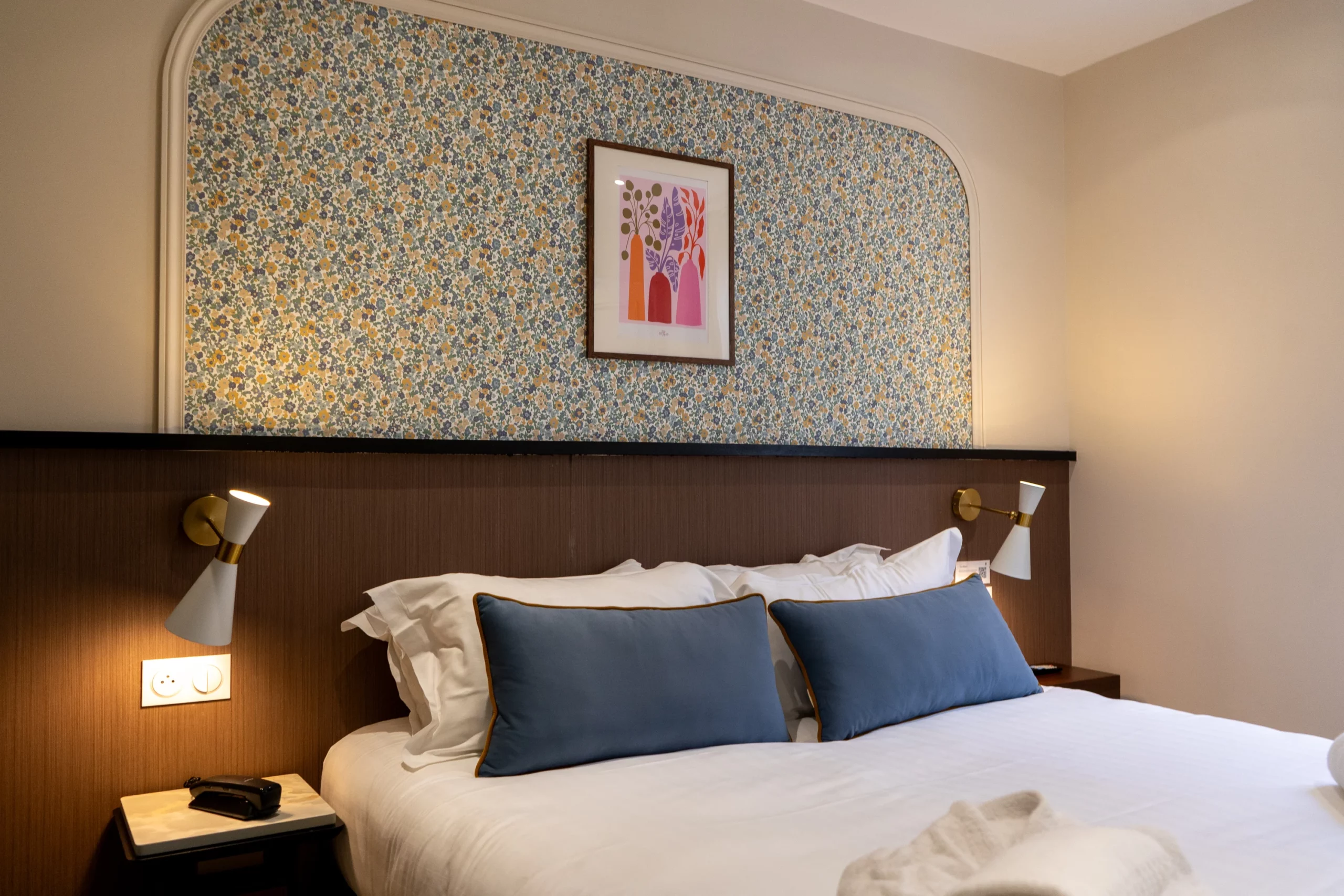
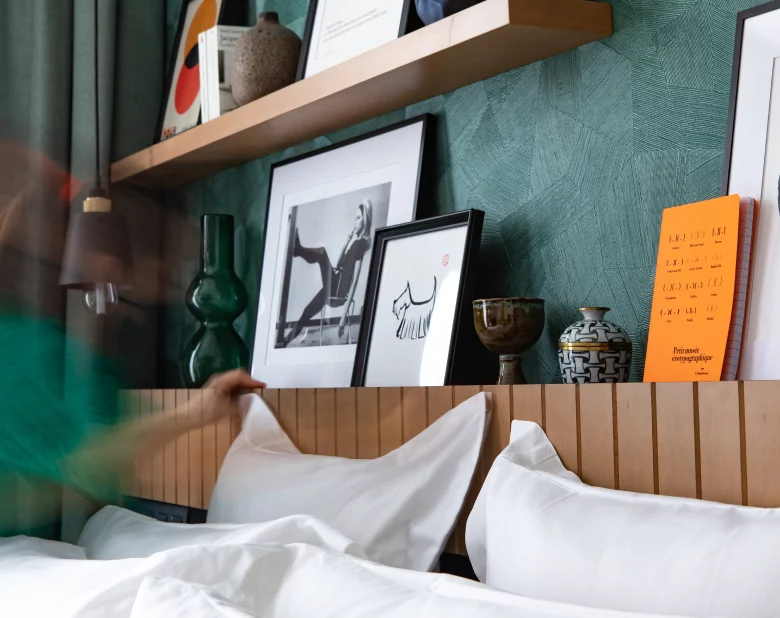
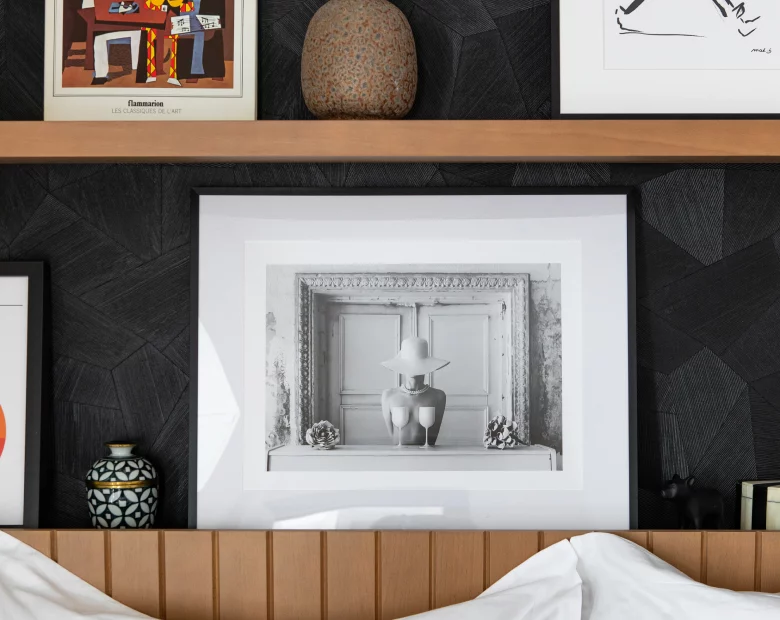
The Joli Môme project, located in the Batignolles neighbourhood, illustrates another facet of hotel repositioning: value creation through simplicity and strong local roots.
The goal was not to turn the hotel into a premium destination, but to restore narrative and emotional coherence.
Joli Môme is defined as:
- a 3-star boutique hotel designed like a home,
- warm, accessible and deeply human.
The hotel renovation focused on tangible value drivers:
- the genuine comfort of the rooms,
- shared spaces placed at the heart of the experience,
- shared moments of everyday life (breakfast, afternoon tea, aperitif),
- a strong connection with the neighbourhood.
3. Key success factors for a hotel repositioning
Three essential levers to secure value creation
1. A nuanced understanding of the local market
Each project must start with the neighbourhood: footfall, clientele, competition, usage patterns.
A successful hotel repositioning does not impose a concept; it adapts to its environment.
2. A targeted hotel renovation
Invest where guests actually perceive value: bedding, soundproofing, shared spaces and the overall experience — not just the décor.
3. A rethought business model
Repositioning must integrate:
- operating costs
- a genuine (not just theoretical) move upmarket
- ancillary revenues (F&B, events, local partnerships)
Moon Hospitality’s analysis
A value- and use-driven investment vision
At Moon Hospitality, we see hotel repositioning as a strategic investment tool, rather than a purely architectural project.
Our approach is built around:
- a long-term vision for the asset
- a nuanced understanding of contemporary usage patterns
- the ability to create differentiated, operational and profitable concepts
Maison Mère and Joli Môme demonstrate that it is possible to create value without overinvesting, by focusing on project intelligence rather than excess.